Friday, January 3, 2014

MERS vs SARS - Are We Set To Have a Pandemic?


As a history buff I have spent countless hours engrossed in studies about the black plague and how it spread, decimating Europe. The damage this pandemic did to Europe is legendary, yet most today dismiss that as an anomaly, an unusual experience. Even though we had the Influenza outbreak at the beginning of the 20th Century that killed many quickly and without mercy, Americans dismiss it as 100 years ago and an anomaly. No matter how many times I speak up to say I think we are due for a pandemic, people dismiss me as paranoid or crazy. I don't mind really. I know that if it happens I will be in a better place than they will as far as food, water, shelter, and  medicine go. However with my health, it would be best that I not be exposed to anything stronger than a cold.

I read an article this past June (http://news.yahoo.com/mers-virus-spreads-easily-deadlier-124612196.html) regarding a virus spreading in the Middle East known as MERS (Middle East Respiratory Syndrome) which has a very high mortality rate. MERS spreads quickly and easily and, according to what I have read, does not respond to treatment well.

Are you aware that plague still exists today? Plague is estimated to have killed between 75 million and 200 million people in Europe. It reduced the population of Europe by 30 - 60%! Every year there are still deaths from plague around the world, including in the United States. Scientists are still trying to understand the origins of the Plague outbreak not just for posterity, but because they understand the potential still exists for pandemic outbreaks. The only significant difference between a plague outbreak and MERS is the ability to treat Plague with modern medicine and antibiotics. Plague, caught early enough, responds to antibiotics while MERS appears to be highly resistant to most of our treatments. If a disease spreads rapidly, symptoms develop quickly, and it kills with great speed, we must scramble to find a cure equally as fast and simply avoid being exposed by whatever means necessary. Sometimes those means are quarantine, both self-imposed and government imposed.

For some time now I have been building a comprehensive first aid kit and have blogged about it (You can go here to read those posts). I firmly believe every family should have a comprehensive first aid kit whether you live in the city, suburbs, on rural property, whether close to town or out in the sticks. Having a comprehensive first aid kit will allow you to be more independent so that you can avoid germ infested places such as doctors offices and hospitals. These places are often dangerous simply for the spreading of germs factor. In the case of something like MERS, doctors offices could be deadly. Besides even with the common cold, no one feels like driving to a pharmacy or doctor's office just to get meds. Most would prefer to stay home in bed, drinking liquids, resting, and only having to walk as far as the medicine chest to retrieve medicine.

When I read about things such as MERS, I am forced to face the possibility that a major pandemic is not only possible, but is actually probable in my own lifetime. Air travel makes the rapid spread of a disease that much more realistic an issue. Being prepared with adequate food and medicine, being as self-sufficient as possible, along with planning in advance for potential large-scale situations, allows me to feel a little bit more secure and confident that I am able to deal with the very real potential of such an occurrence. Proactive vs Reactive just makes sense.

If you are concerned about these very real possibilities as well, you may want to start with building your first aid kit and considering what would happen in your world should a pandemic hit. If you find that possibility of a medical pandemic too unrealistic, just consider if a major weather even were to hit your area. A weather event (remember hurricane Sandy or Katrina?) would have the same consequences with limitations on the ability to purchase food, water, and fuel as well as potential disruption to the power grid and telephone systems.

What do you think? Are you prepared for a potential pandemic? Do you agree or disagree that there could be a pandemic within the next 50 years? Have you prepared for emergencies in any way in your home?

Thursday, January 2, 2014

Reusable Produce Bags

I love to poke around the internet for things that I think will contribute to a greener and more sustainable lifestyle. Recently, while on a trip to Washington state, I found that they have outlawed the use of plastic grocery bags. As a result, everyone either brings their own reusable bags or they must pay a fee for old school brown bags. As I wandered up and down the aisles of the market, I was struck by all the unique reusable bags folks carried. After returning home to Arizona, I started researching reusable bag ideas. I found that there are lots of options with regards to grocery sacks. I also discovered there are many kinds of reusable produce bags.

"Reusable produce bags?" you ask. Yes, reusable bags to both shop with and to store your fruits and veggies in when you return home.

After carefully considering all the options that I found, I decided to go with Flip & Tumble produce bags. I like Flip & Tumble bags for several reasons. First, the bags are a convenient size measuring  12" x 14" each. The fine polyester mesh will prevent even the smallest of seeds or vegetables from slipping through, but allows you to run the bag under water to rinse the bounty contained within. You can even shop for bulk items such as rice and quinoa without dropping a grain. I especially like the color tabs on each bag. There are five separate colors that allow you to assign colors to a particular type of fruit or vegetable. The poly mesh bags can be washed in a washing machine as well, which makes them easy to keep clean and fresh. The mesh dries quickly when hung after washing.

You may be asking by now, "How much already?" Well, how's $11 for five of them? I looked at fabric at my local craft store, priced it by the yard, figured time and effort along with aesthetic end-result, and decided sewing these myself really would not save me anymore money and the time to do so could be better spent on other projects. I plan to order two more sets for a total of 15 of these great bags to allow for me to shop when some are still in use.

The bags compact easily and are super lightweight. Considering the ease of cleaning them, it will be no problem to take them along with my reusable grocery sacks even if I only end up using a couple on that particular trip.

Toggles
Being green starts in baby steps and this baby step is an easy one. I will improve these bags by adding a toggle to each one. I can buy them very inexpensively and they will secure the drawstrings for when the clerk is ringing up the contents without risk of them getting loosened or some of the contents potentially spilling on my trip back home.

Interested in a set of your own? Check them out here at my Amazon store: Flip & Tumble Reusable Produce Bags

What do you think about eliminating out the plastic produce bags that markets offer for produce? Do you think this should be mandatory, as in Washington state, or shopper's choice?

Wednesday, January 1, 2014

Welcome New Year 2014

Here it is. The fresh slate we all dream of is here on the first of January 2014. This is the part where I am supposed to make a list of things I have long dreamed of doing but have not along with promises to achieve them within the next 365 days. While at a great New Years party thrown by a good friend and she had all the guests write down what we want to accomplish in this upcoming year. At midnight we burned the paper and send out our desires into the Universe. I stood for some time looking at the white quarter square of paper lost in thought when someone asked, "Do you need help with that?" Honestly? No. I was actually reflecting on how many of the things I said I would do at the beginning of 2013 were accomplished, just as I planned. I was really just thinking that I was rather proud of myself for not being one of those folks who always say they will do something and then just don't. I am a jump-in-with-both-feet kind of gal, and I like that about me. When I have a dream or set a goal, I get it done.

2013 was tough, but not as tough as 2012, so that is a good thing. So as I was considering what I want for this upcoming year, I decided to keep it simple.

  • Finish out the school year strong
  • Move to OK and get settled
  • Spend less time worrying 
  • Write every day 

The next six months will be decisive ones for me. I embrace the challenge, but always worry. Can I pull this off? Can I make this move? Yes. Yes I can. All doubt fades away.

I keep this vision in my head whenever I get discouraged:
On January 1st of 2015 I will be sitting in my cozy new home, feeding the wood stove, sipping hot coffee, and writing. I will look out the windows to snow on the ground that is unsullied by cars and people. I will turn on a light using the electric I wired. I will walk on the wood floors I, myself, installed. I will be warm in the house I insulated. I will cook in the kitchen on counters and cabinets I built and installed. I will be living green, eating healthy, and my pace of life will have slowed dramatically. I will be making a new list and reflecting on all I accomplished. I can hardly wait.
And so, as the new year begins, I wish all of my friends, family, and readers a wonderful new year. May your year begin strong and end with you smiling. May your worries be few. May the things you set your mind to be accomplished as you envision. May you look back on this year and think, "Ya, I got this."

Happy New Year 2014


Monday, December 30, 2013

Mason Jar Monday - Mini Light Covers

Yule was wonderful this year. I hope that everyone has had as wonderful a holiday season as I have. This past week has been spent with good family and friends, exchanging gifts, sharing meals, and visiting.

I was gifted with a great Mason Jar Monday idea: Mini Mason Jar Light Covers. Each vintage-style glass jar has a "ring" at the top where the jar seal should be on a real jar, there is a rubber piece that has an X cut in it. You just push a mini light into the jar.

The glass has a slight green tinge with bubbles in the glass, just like the vintage ones. They even read, "Mason Nov 30th 1858" on the glass. These are just adorable and the way the lights shine through them is beautiful. Each one measures about 3" tall and 1" in diameter.

I plan to hang these over my kitchen sink for a little additional lighting in a sweet country style. These are not inexpensive by any means, coming in at around $4 a jar, but I think they are well worth the investment. I was lucky enough to be gifted with two dozen! I am going to use them in the kitchen and in the living room. They provide lovely ambient light. I use LED lights that are battery operated so I can put them just about anywhere I want them.

Interested in buying some? You can find them here on Amazon.

Best wishes for a safe and Happy New Year from Rancho No Dinero!

Sunday, December 22, 2013

Grey Water Friendly Cleaning Products

I have immersed myself in the world of grey water and black water and have found that there is a ton of information out there that conflicts. Ugh! It is clear to me from all that I have read that grey water systems are, for Americans, in their infancy. While grey water is common in third world countries, we also understand that those systems are not always by choice and the folks using them are, more often than not, not aware of how damaging the products they are flushing out in their water are to the earth around them. Survival is their focus, not being Earth-friendly. However, here in the US and in most developed countries, the choice of grey water is a smart and Earth-friendly choice providing we understand just what constitutes grey water friendly and what will make waste water black water and not Earth-friendly. So, with the goal of understanding what can and cannot be used in your grey water system, I will break down the areas we use products in and what you can safely use and flush out in your grey water system vs what products will need to be considered contaminants and must be flushed out in black water containment systems. We will begin with basic cleaning products in this post.

One specific area to pay special attention to is laundry. This area is of particular concern for me because, other than draining a bathtub, it is going to be the largest contributor of water to my grey water system. I used to like to make my own laundry detergent, but I have discovered that Borax is NOT grey water friendly. My recipe calls for Borax. The reason it is damaging to the environment is due to the raising of the salt level of soil. Basically it causes the soil to become non-plant friendly and that is definitely counter-productive to the purpose of the grey water system. As a result of learning this, I will have to revisit how to make a home-made laundry soap that can be used in a grey water system.

On a positive note, my research has led to discovering a plethora of products I can start using now, forming good habits for when I am ready to move onto the homestead. Here are the product lines I have found most compelling based on availability, costs, and reviews:

Ecos:  Ecos makes a liquid laundry detergent that has a built in fabric softener. The price is fair (I found it here on Amazon in a six-pack that will wash 384 loads. Divided into the cost, it comes out to a little over 10 cents a load. A very fair price for an eco-friendly product.) and they have several scents that are popular in addition to a free-and-clear version. Add in free Prime shipping and it is an even better deal.

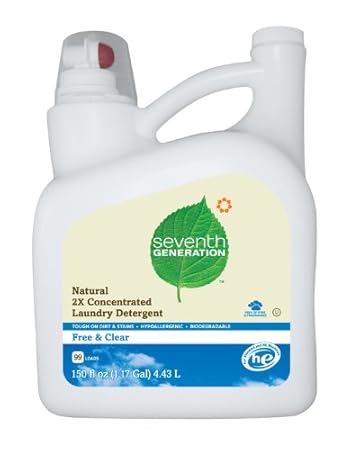
Seventh Generation: Seventh Generation is a well known brand of cleaning products sold in most larger health food stores and markets. I find that their product is good, works well, and is both grey water and septic system friendly. However, it is quite expensive (about double the Ecos cost per load). Visit their website to learn more and to sign up for coupons and specials. www.SeventhGeneration.com.

Soap Nuts: NaturOli makes a tremendous line of Soap Nut products. Soap nuts are the seeds of a tree and are a 100% natural surfactant. They clean and leave no residue or smell. Highly concentrated, the cleaners are sold in small bottles that take up very little space and can be reused or recycled. You can see their line of products at their website: www.NaturOli.com or directly to their soap nut product line at https://store.naturoli.com/soap-nuts-liquid/ or look for their products on Amazon. If you have a front loading washing machine, you really need to look into using soap nuts. Soap nut products are safe for grey water systems as well as septic systems. Using their Extreme 18X product for laundry comes out to about 16 cents per load. An 8oz bottle will wash 96 loads in an HE front loading machine. The product can also be used as a chemical-free household cleaner and is safe for body and hair too!

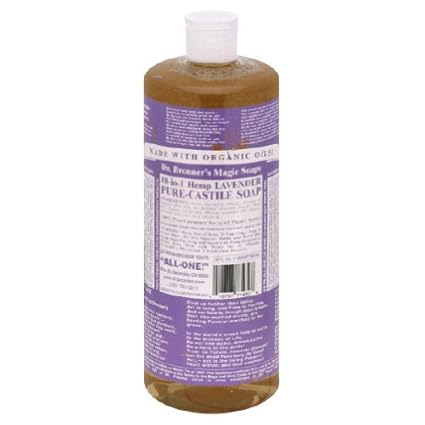
Dr. Bronner's: Dr. Bronner's products are castille based soaps. While there is nothing on their site that specifically states that their soaps are grey water friendly, castille soap is naturally based and all the chat rooms and boards that chatter about grey water all recommend Dr. Bronner's liquid soaps. Dr. Bronner's site has a list of 18 ways to use their liquid. Eco friendly and sold in bulk, Dr. Bronner's is a serious contender. www.DrBronners.com

There are some other products I have found, but they are high-priced or obscure. To make real change I feel that products must be  accessible, and, most importantly, reasonably priced. I chose to double-check if I could easily locate items on Amazon since living in a rural area often limits shopping choices. Being able to be order things to be delivered at a reasonable cost just makes sense. I am also aware that many are proponents of using vinegar. I agree that vinegar is eco-friendly, but it is not cost effective over the long haul and is stored in large containers.

Do you have any eco-friendly products you stand by? Share your experiences with us in the comments below.

Tuesday, December 17, 2013

Grey Water vs Black Water Part 1

Over the course of my next few posts I will be explaining my plan for my grey water system (also spelled gray water), its limitations, and its benefits. If you have been interested in or are considering a grey water system, you may find my research helpful. Please feel free to ask questions and add to the discussion in the comments below. I welcome any feedback you may have.

I have been designing the plumbing system for my new home to be efficient and green. There are several factors that will play into how one designs and executes the plumbing in a shouse, such as: A) where kitchen and bath are located, B) sewer or septic, C) codes, and D) pipe or Pex. You would be surprised how complicated it can be to design your own system. A couple of these factors were already decided for me. First, my property already has a septic tank installed and, secondly,  I am installing a composting toilet as opposed to a flushing one.

One thing that has always been a non-negotiable for me in designing my plumbing is my desire to install and use a grey water system. Grey water is generally water that comes from bathing, washing dishes, and laundry, that is used to water the yard. It does NOT include water from the toilet. Some areas do not allow for grey water use (check with city and county codes where you live) because they simply don't trust people to use the system safely. It is more complicated than just running a drain line out into the flower bed, which is what many people think is how a grey water system functions.

The most basic of grey water systems is using a basin to wash dishes and then walking the water out to the garden to water plants. While this is an excellent way to reuse dish water, there are factors that must be considered or what you pour into your garden may just kill your plants. Draining washing machine water from a load that was used to wash diapers is also considered bad news. Feces is the enemy of the grey water system. Your job in designing your grey water system is to ensure that feces doesn't make it to the garden and that bacteria and germs are not encouraged to fester.

When I began researching this idea I found that lots of information is out there, but much of it is impractical and/or outdated. After sifting through all the detritus found on the net, I have narrowed my system down to this:

  • Water from the kitchen sink, bathtub/shower, bathroom sink, and washing machine will all be routed to grey water pump, which will then pump the grey water to a mulch bed away from the Shouse. 
  • The mulch bed will be built using trenches to run the pipe, Y's to branch the pipe out, and then the pipes will dead end in specific mulch beds. 
  • The mulch beds will be next to trees and garden beds to assist in irrigating them. I will NOT be watering root based vegetables with grey water. 
  • A diverter will allow me to run the drain water into the septic if there is any chemical (bleach for example) or feces potential (washing diapers or a poopy kid) in the water. 

While this is a very simplified overview of my grey water system, I will be going into detail about it in the next few posts. There are some definite considerations when considering a grey water system, but the most important is SAFETY. Not breeding bacteria, germs, mosquitoes, or creating a drowning hazard must be built into whatever system you settle on using. Also, you must consider how much water your household uses on a daily basis. Too much water can be as bad as too little. The size of your system must be proportionate to your water usage. My next post will begin with what kinds of cleaning products can safely be used in a grey water system and which ones should be diverted to a sewer or septic system.

Do you use a grey water system or recycle your water in some way?


Monday, December 16, 2013

Mason Jar Monday - Cross Stitch Jar Covers and Inserts

Plastic Canvas Insert
Mason Jar Monday would be remiss if it didn't include showing how to label jars in some decorative way.

I stitched up this jar lid insert over the weekend. This jar's purpose will be storing all the nails, screws, bolts, picture hangers, etc. that end up in a junk drawer in the kitchen. By storing them in a jar such as this, I can easily see what I have and pour out the contents when I am ready to sort them. This particular insert is made from 14 count plastic canvas (sold for 99 cents at my local craft store) and was stitched using a pattern leaflet I purchased on Ebay. I chose to make the insert out of plastic canvas because it is less likely to become soiled and, if it does get dirty or dusty, can be washed gently in soapy water and laid out to dry. I prefer plastic canvas to aida cloth for any application which 1) I want to reuse and 2) which has the potential to get soiled. It is sold in colors, a clear look, and plain old white.
Slip on Jar Cover

There are many ways to decorate/label your jars to use them for more than just jelly or jam storage. I purchased a dozen slip-on style jar covers for just $5 on Ebay. I stitch one up whenever I need a nice presentation for a jar gift. The chicken cover was a gift for my "Secret Santa" exchange at work and was a big hit. I also discovered a co-worker who enjoys cross stitch, which was an added bonus.

Rachel over at Paper Doily has posted this easy first-try cross stitch pattern for those of you looking for a quick something to whip up as a gift. Although Rachel stitched this up as an easy ornament, this would make a great topper for a small jelly jar to store ornament hooks. If you like it and/or use it, please stop by her blog, Paper Doily, and give her a howdy and a shout out!


Not someone who enjoys needle crafting? You can print out labels you design. Avery (www.Avery.com) sells print-to-the-edge round labels that can be used to label the lids of canning jars. There are also ones that go directly onto the glass. With free templates found on the Avery site, you can jazz up any plain old jar.

Happy Crafting!