Showing posts with label grey water. Show all posts

Wednesday, October 15, 2014

The Beginnings of the Grey Water System


Check it out! I have a sink with plumbing, well at least the drain pipe portion of the plumbing. Last weekend I installed the sink and I used it with just a bucket under it all week. I felt like a queen being able to wash dishes in the sink (geez, never thought I would say that!). It is much easier to cook and then clean up when you don't have to worry about carrying a heavy container of dirty water outside afterward.


The plumbing under the sink is done in the usual manner. I used plumbers putty around the drain lip before installation and Teflon tape around the threads to make leak-proof connections. Drilling a hole in the wall, I pushed the pipe through and used flanges (unfortunately I only found them in chrome, so I will be spray spray painting them) and I will use a silicon caulk to make the hole air, rodent, and insects from passing through. I still have to insulate, run the water lines in, and install the wallboard under the sink, so I am not going to add silicone just yet, but for now I have a draining sink! For now it will drain outside, directed into the forest that surrounds the building, however eventually it will be connected to the grey water pipe system and water my raised garden beds. Water will come in, be used, and then cycle out to water the garden. All things running as planned, drought will be less of an issue for my gardens each summer.


The place where I built the Shouse sits up on a hill, the place where the raised beds will eventually be built and planted is down low on the property about 300 feet away on the adjacent 2 acres. Theoretically it is simple, as gravity will do all the work to transport the water to the beds. Realistically the challenges will be how to best evenly distribute the water to all the beds, how to keep food particles from clogging the weep holes, and keeping chemicals that are harmful from the system. Despite the logistics of the entire operation, I am confident that grey water is the only ecologically sound and practical solution to recycling the waste water and keeping the garden well hydrated in the dead of summer.


I never thought I would be so excited over a simple drain!


Sunday, December 22, 2013

Grey Water Friendly Cleaning Products

I have immersed myself in the world of grey water and black water and have found that there is a ton of information out there that conflicts. Ugh! It is clear to me from all that I have read that grey water systems are, for Americans, in their infancy. While grey water is common in third world countries, we also understand that those systems are not always by choice and the folks using them are, more often than not, not aware of how damaging the products they are flushing out in their water are to the earth around them. Survival is their focus, not being Earth-friendly. However, here in the US and in most developed countries, the choice of grey water is a smart and Earth-friendly choice providing we understand just what constitutes grey water friendly and what will make waste water black water and not Earth-friendly. So, with the goal of understanding what can and cannot be used in your grey water system, I will break down the areas we use products in and what you can safely use and flush out in your grey water system vs what products will need to be considered contaminants and must be flushed out in black water containment systems. We will begin with basic cleaning products in this post.

One specific area to pay special attention to is laundry. This area is of particular concern for me because, other than draining a bathtub, it is going to be the largest contributor of water to my grey water system. I used to like to make my own laundry detergent, but I have discovered that Borax is NOT grey water friendly. My recipe calls for Borax. The reason it is damaging to the environment is due to the raising of the salt level of soil. Basically it causes the soil to become non-plant friendly and that is definitely counter-productive to the purpose of the grey water system. As a result of learning this, I will have to revisit how to make a home-made laundry soap that can be used in a grey water system.

On a positive note, my research has led to discovering a plethora of products I can start using now, forming good habits for when I am ready to move onto the homestead. Here are the product lines I have found most compelling based on availability, costs, and reviews:

Ecos:  Ecos makes a liquid laundry detergent that has a built in fabric softener. The price is fair (I found it here on Amazon in a six-pack that will wash 384 loads. Divided into the cost, it comes out to a little over 10 cents a load. A very fair price for an eco-friendly product.) and they have several scents that are popular in addition to a free-and-clear version. Add in free Prime shipping and it is an even better deal.

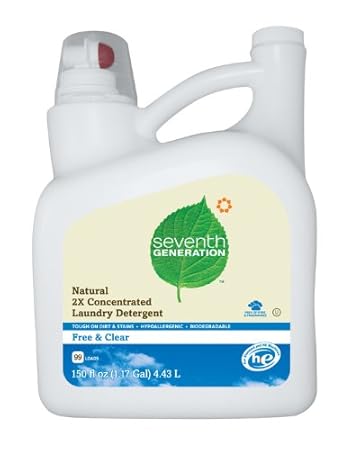
Seventh Generation: Seventh Generation is a well known brand of cleaning products sold in most larger health food stores and markets. I find that their product is good, works well, and is both grey water and septic system friendly. However, it is quite expensive (about double the Ecos cost per load). Visit their website to learn more and to sign up for coupons and specials. www.SeventhGeneration.com.

Soap Nuts: NaturOli makes a tremendous line of Soap Nut products. Soap nuts are the seeds of a tree and are a 100% natural surfactant. They clean and leave no residue or smell. Highly concentrated, the cleaners are sold in small bottles that take up very little space and can be reused or recycled. You can see their line of products at their website: www.NaturOli.com or directly to their soap nut product line at https://store.naturoli.com/soap-nuts-liquid/ or look for their products on Amazon. If you have a front loading washing machine, you really need to look into using soap nuts. Soap nut products are safe for grey water systems as well as septic systems. Using their Extreme 18X product for laundry comes out to about 16 cents per load. An 8oz bottle will wash 96 loads in an HE front loading machine. The product can also be used as a chemical-free household cleaner and is safe for body and hair too!

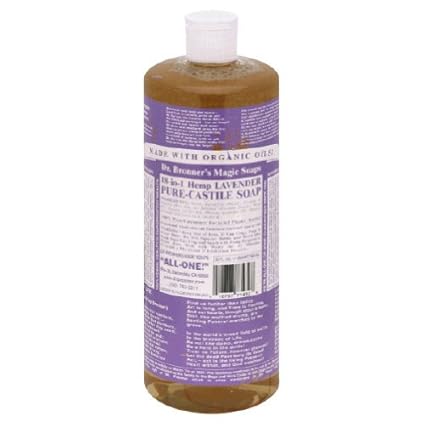
Dr. Bronner's: Dr. Bronner's products are castille based soaps. While there is nothing on their site that specifically states that their soaps are grey water friendly, castille soap is naturally based and all the chat rooms and boards that chatter about grey water all recommend Dr. Bronner's liquid soaps. Dr. Bronner's site has a list of 18 ways to use their liquid. Eco friendly and sold in bulk, Dr. Bronner's is a serious contender. www.DrBronners.com

There are some other products I have found, but they are high-priced or obscure. To make real change I feel that products must be  accessible, and, most importantly, reasonably priced. I chose to double-check if I could easily locate items on Amazon since living in a rural area often limits shopping choices. Being able to be order things to be delivered at a reasonable cost just makes sense. I am also aware that many are proponents of using vinegar. I agree that vinegar is eco-friendly, but it is not cost effective over the long haul and is stored in large containers.

Do you have any eco-friendly products you stand by? Share your experiences with us in the comments below.

Tuesday, December 17, 2013

Grey Water vs Black Water Part 1

Over the course of my next few posts I will be explaining my plan for my grey water system (also spelled gray water), its limitations, and its benefits. If you have been interested in or are considering a grey water system, you may find my research helpful. Please feel free to ask questions and add to the discussion in the comments below. I welcome any feedback you may have.

I have been designing the plumbing system for my new home to be efficient and green. There are several factors that will play into how one designs and executes the plumbing in a shouse, such as: A) where kitchen and bath are located, B) sewer or septic, C) codes, and D) pipe or Pex. You would be surprised how complicated it can be to design your own system. A couple of these factors were already decided for me. First, my property already has a septic tank installed and, secondly,  I am installing a composting toilet as opposed to a flushing one.

One thing that has always been a non-negotiable for me in designing my plumbing is my desire to install and use a grey water system. Grey water is generally water that comes from bathing, washing dishes, and laundry, that is used to water the yard. It does NOT include water from the toilet. Some areas do not allow for grey water use (check with city and county codes where you live) because they simply don't trust people to use the system safely. It is more complicated than just running a drain line out into the flower bed, which is what many people think is how a grey water system functions.

The most basic of grey water systems is using a basin to wash dishes and then walking the water out to the garden to water plants. While this is an excellent way to reuse dish water, there are factors that must be considered or what you pour into your garden may just kill your plants. Draining washing machine water from a load that was used to wash diapers is also considered bad news. Feces is the enemy of the grey water system. Your job in designing your grey water system is to ensure that feces doesn't make it to the garden and that bacteria and germs are not encouraged to fester.

When I began researching this idea I found that lots of information is out there, but much of it is impractical and/or outdated. After sifting through all the detritus found on the net, I have narrowed my system down to this:

  • Water from the kitchen sink, bathtub/shower, bathroom sink, and washing machine will all be routed to grey water pump, which will then pump the grey water to a mulch bed away from the Shouse. 
  • The mulch bed will be built using trenches to run the pipe, Y's to branch the pipe out, and then the pipes will dead end in specific mulch beds. 
  • The mulch beds will be next to trees and garden beds to assist in irrigating them. I will NOT be watering root based vegetables with grey water. 
  • A diverter will allow me to run the drain water into the septic if there is any chemical (bleach for example) or feces potential (washing diapers or a poopy kid) in the water. 

While this is a very simplified overview of my grey water system, I will be going into detail about it in the next few posts. There are some definite considerations when considering a grey water system, but the most important is SAFETY. Not breeding bacteria, germs, mosquitoes, or creating a drowning hazard must be built into whatever system you settle on using. Also, you must consider how much water your household uses on a daily basis. Too much water can be as bad as too little. The size of your system must be proportionate to your water usage. My next post will begin with what kinds of cleaning products can safely be used in a grey water system and which ones should be diverted to a sewer or septic system.

Do you use a grey water system or recycle your water in some way?


Saturday, March 30, 2013

Beginning Thoughts on Plumbing


I have been considering options regarding plumbing for my tiny home. There are lots of options for running water lines from traditional Copper on to the more modern PEX. While researching the options, I came across this ingenious little item.  Known as the Clear J Trap, it is a semi-transparent (there are other options ranging from black to clear) J-Trap that opens at the bottom! How awesome is that?

Wednesday, January 16, 2013

Doing the Wash Off-The-Grid


As I have stated in prior posts, I have no intention of lessening my quality of life when we move to the new homestead. I will change many of the ways I do things, but the quality of the end product will not be reduced and the method will not be torture.  A ton of folks complain about laundry, which astounds me because, really, the machines do all the work. I just add soap and fold. The machines do the rest. On my new homestead we intend to be off the grid as much as possible. This means my homestead will be people powered, solar powered, or wind powered as much as possible. While I will have a washing machine and a dryer, I intend to only use them when absolutely necessary so that I don’t have to rely on a petrol based generator to do wash.